What? So What? Now What?
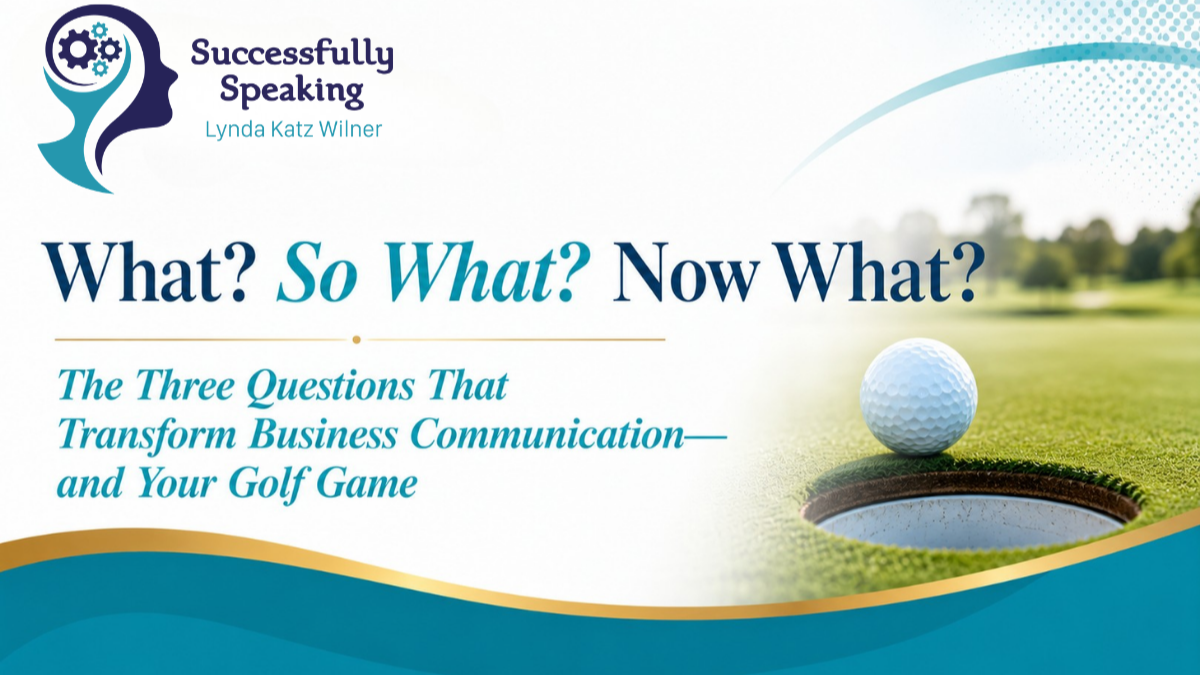
The Three Questions That Transform Business Communication and Your Golf Game
Have you ever…
Endured a presentation wondering, "Why are you telling me this?"
Listened to someone describe a problem in detail without knowing what they wanted you to do?
An efficient framework for effective communication can be built around three questions: What? So What? Now What? Whether you're leading a meeting, delivering a presentation, coaching an employee, or speaking to a client, these three questions help structure a clear, relevant, and actionable message.
This framework was first introduced by educator Terry Borton in 1970. More than five decades later, it remains one of the most effective ways to communicate clearly, make better decisions, and move people to action.
What?
This is where you state the problem clearly. What is the data that supports it? Facts are essential, but information alone rarely changes behavior.
So What?
Why does this matter? How will it affect the organization, the customer, or the team? Now communication becomes more meaningful. Leaders must help others understand the significance behind the information (“the what”) rather than assume everyone will see it.
Without the "So What?" your audience may understand your message but never appreciate its value. They need to connect the dots.
Now What?
What should happen next? Who is responsible for the next step? What decision needs to be made? This is the call to action. Great communicators never leave their audience wondering. They provide clarity, direction, and confidence.
When you consistently answer these three questions, your communication becomes purposeful and influential instead of simply informative.
The Golf Parallel
I often relate leadership communication to golf. Imagine you've just hit your tee shot into a water hazard, a bunker, or even out of bounds. How do you respond?
WHAT? You can spend the next several minutes talking about all the elements that created the problem (swing, wind, chatter on the tee box). Remaining in the “what” is not productive.
SO WHAT? You acknowledge what this means. Connect the dots. Accept your situation and decide what you can do with it. You may need to change your strategy to minimize the damage.
NOW WHAT? You decide. Take your drop. Choose the right club. Commit to the shot. Execute with confidence.
Elite golfers don't waste energy wishing for a different lie or complaining. They assess reality (What?); they understand the consequences (So what?), and they make the next best decision (Now what?). Look forward rather than backwards.
Leaders Do the Same
Every organization encounters unexpected challenges:
A project falls behind schedule.
A key employee resigns.
A client changes priorities.
Sales numbers decline.
The presentation doesn't go as planned.
Strong leaders don't remain stuck in the "What." They quickly move their teams through the entire communication process: So what does it mean? Now what are we going to do?
This approach creates clarity, reduces anxiety, and keeps teams focused on solutions instead of setbacks.
Whether you're speaking in the boardroom or standing over a difficult bunker shot, success depends on your ability to think clearly and execute purposefully.
The next time you're preparing a presentation or recovering from a difficult shot on the golf course, remember these three simple questions:
What? So What? Now What?
Great communicators and great golfers have something in common; they don't dwell on where the ball landed…they focus on making the very next shot count.
Check out my FREE eBook, “Tee Up Your Speech: Golf is Like Public Speaking”
Contact Lynda Katz Wilner at LKWilner@successfully-speaking.com to learn how you can improve your communication and leadership skills.